More Than 650+ People Are in OCIA at St. Mary’s. What Does That Actually Mean?
A student in OCIA was talking with Kevin Pesek ’10 recently and was asked a fairly simple question: What is your favorite part of Mass?
The student cannot yet receive Communion, but this was her answer:
“When everyone receives Communion. I obviously can’t receive, but I am just so excited that my brothers and sisters get to receive Jesus. It is such a gift for me that I even get to be close to someone who has received Jesus.”
She wasn't describing her appreciation for a ritual. She was talking about being close to Jesus Christ, whom Catholics believe is truly present in the Eucharist. Even before she can receive Him sacramentally, this student has begun to recognize the gift being offered.
That student is one of hundreds currently walking through the Order of Christian Initiation of Adults (OCIA) at St. Mary’s Catholic Center.
This fall, more than 650 people are connected to OCIA across two groups. More than 380 attended the group that began on September 1, 2026, while more than 270 began formation in January and are now entering their second semester, with those who are ready preparing to receive the sacraments on November 21, 2026.
It is a remarkable number. It also needs some explanation.
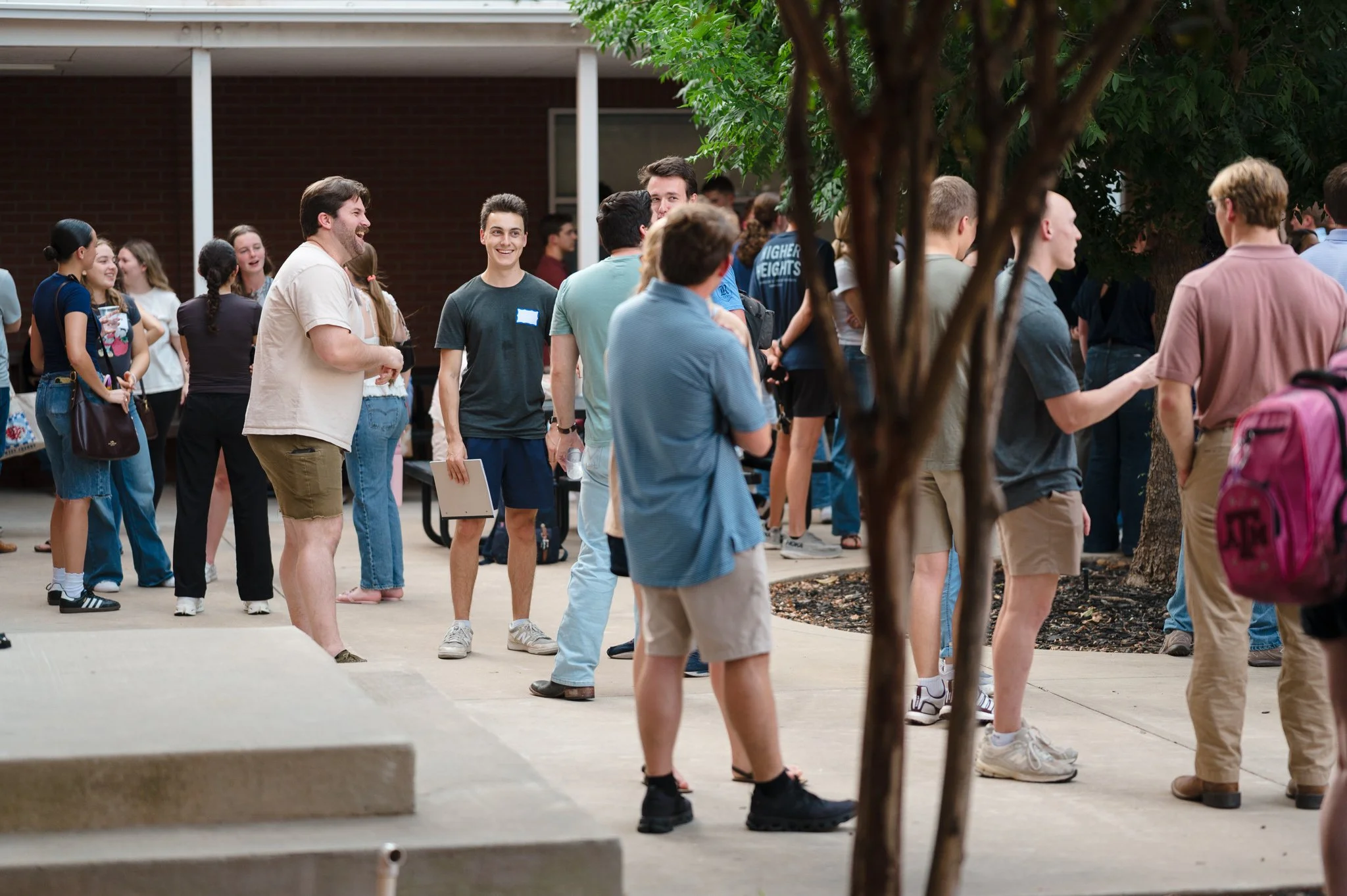
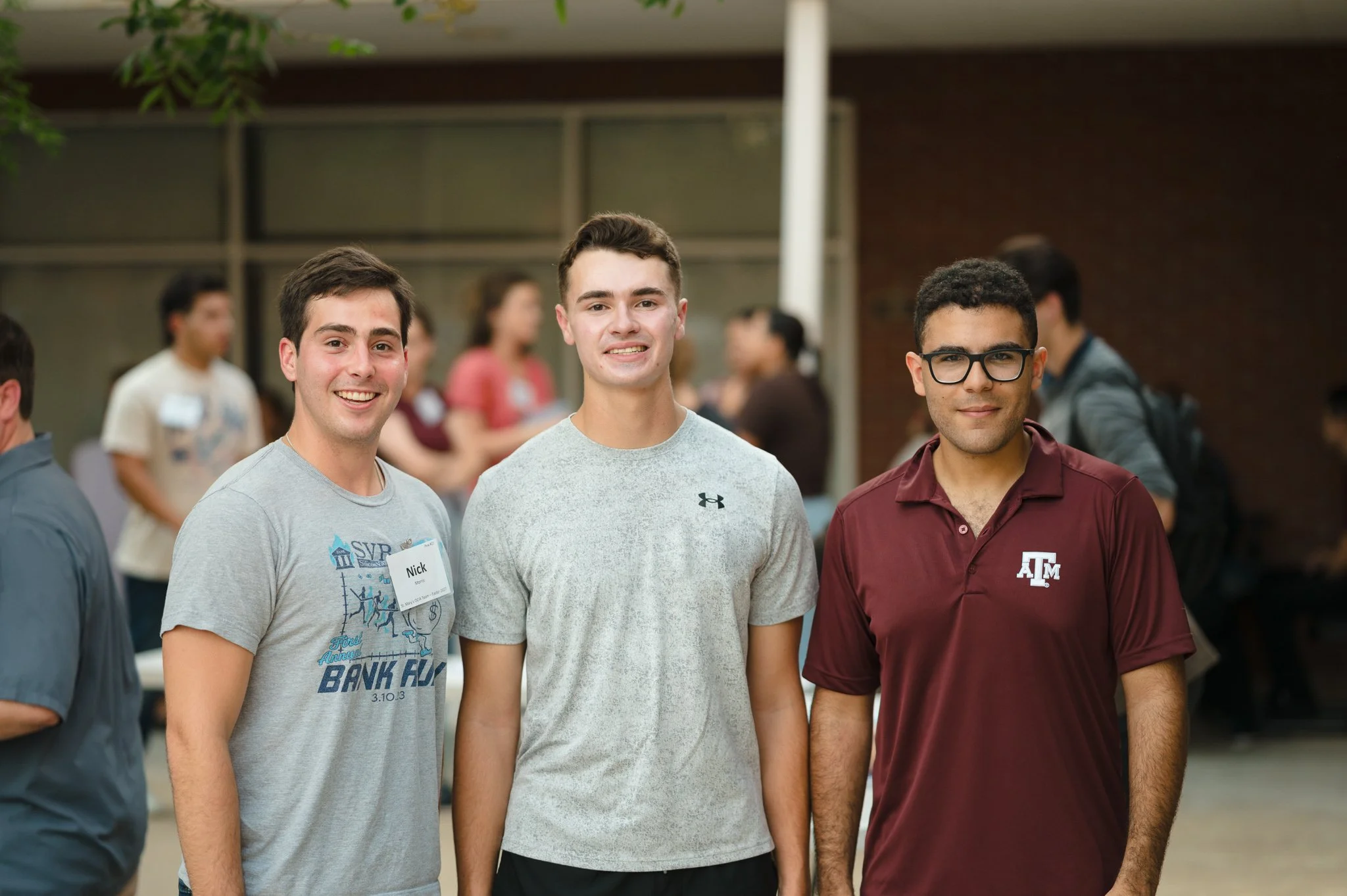
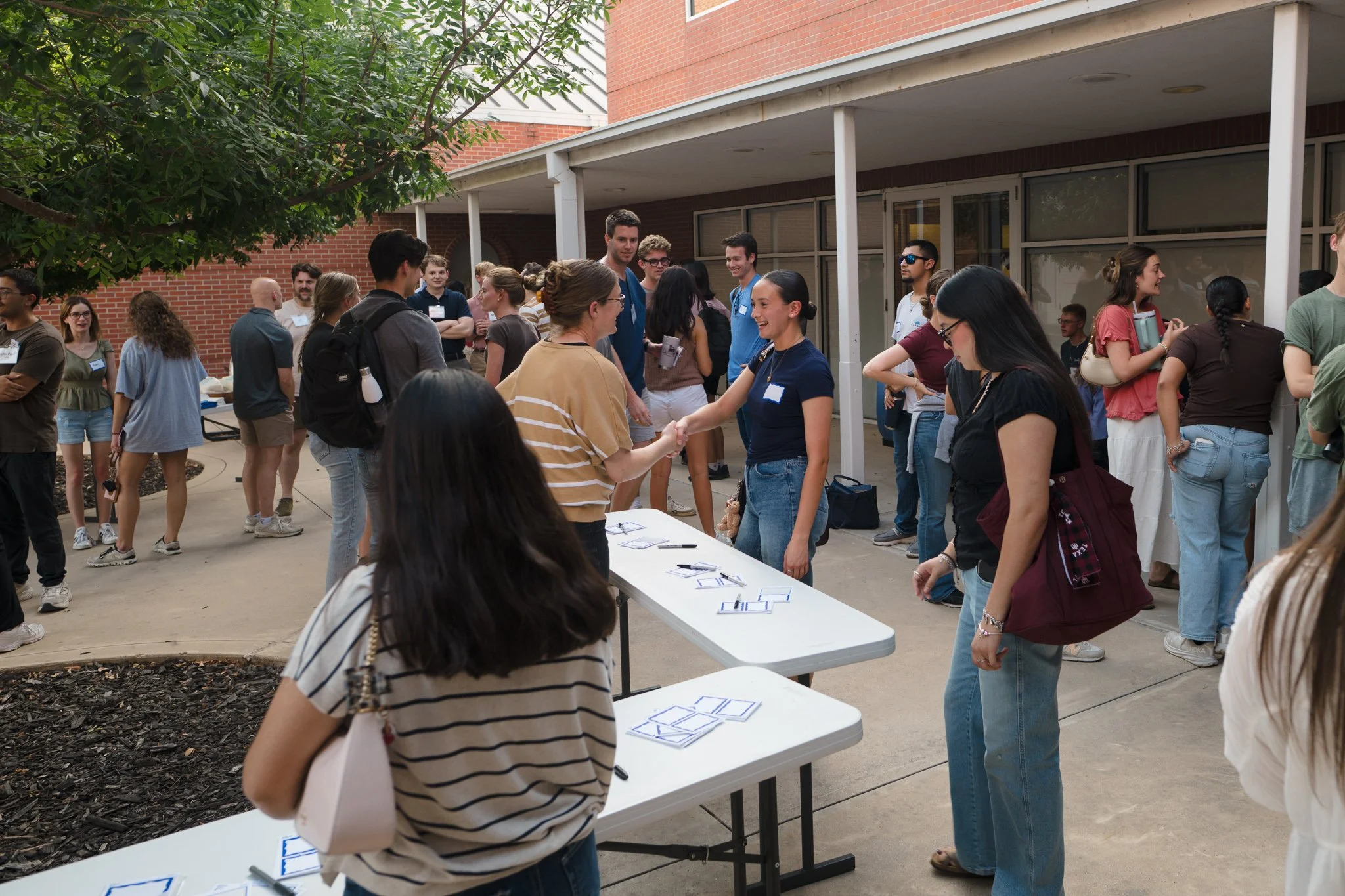
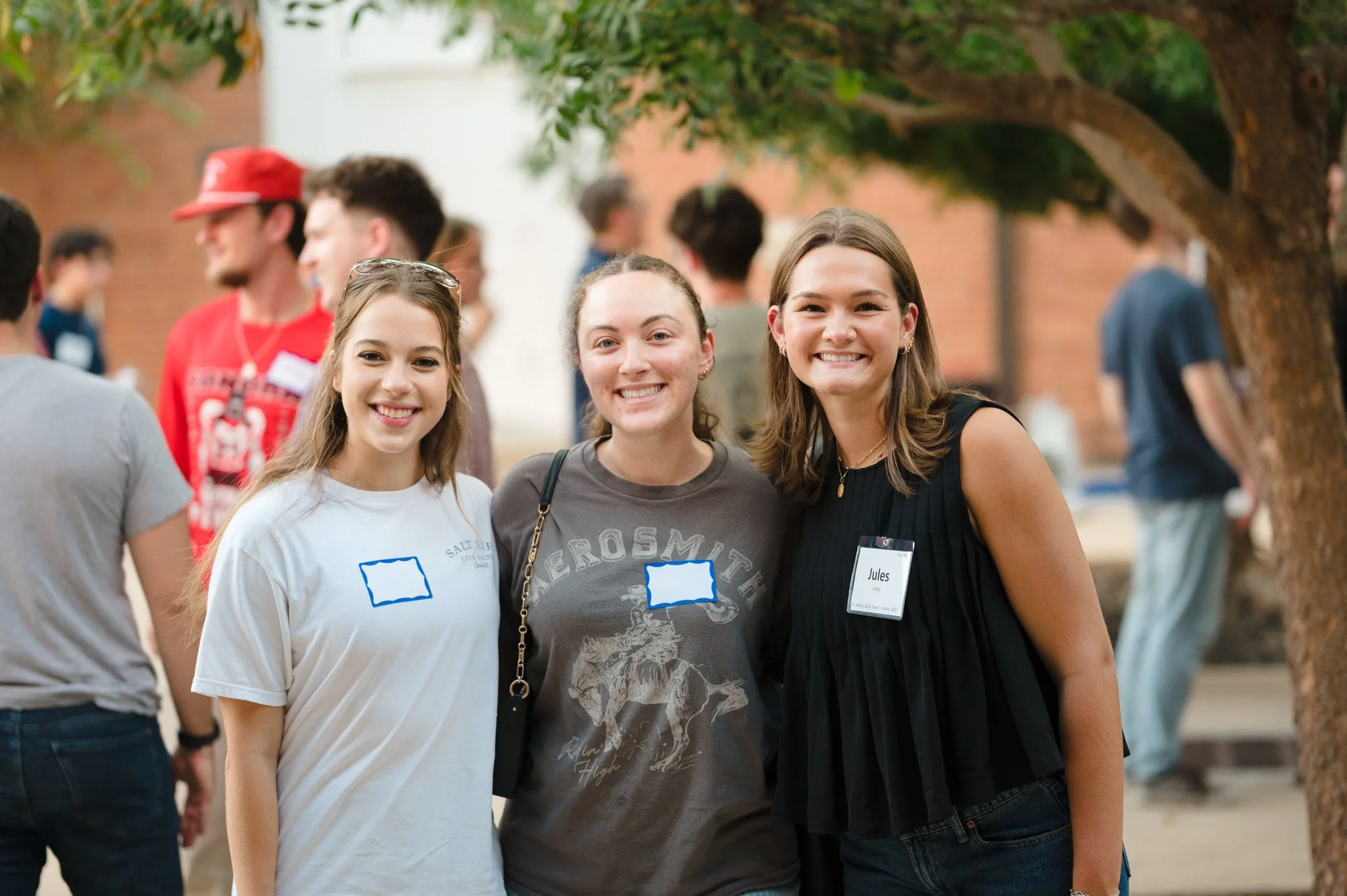
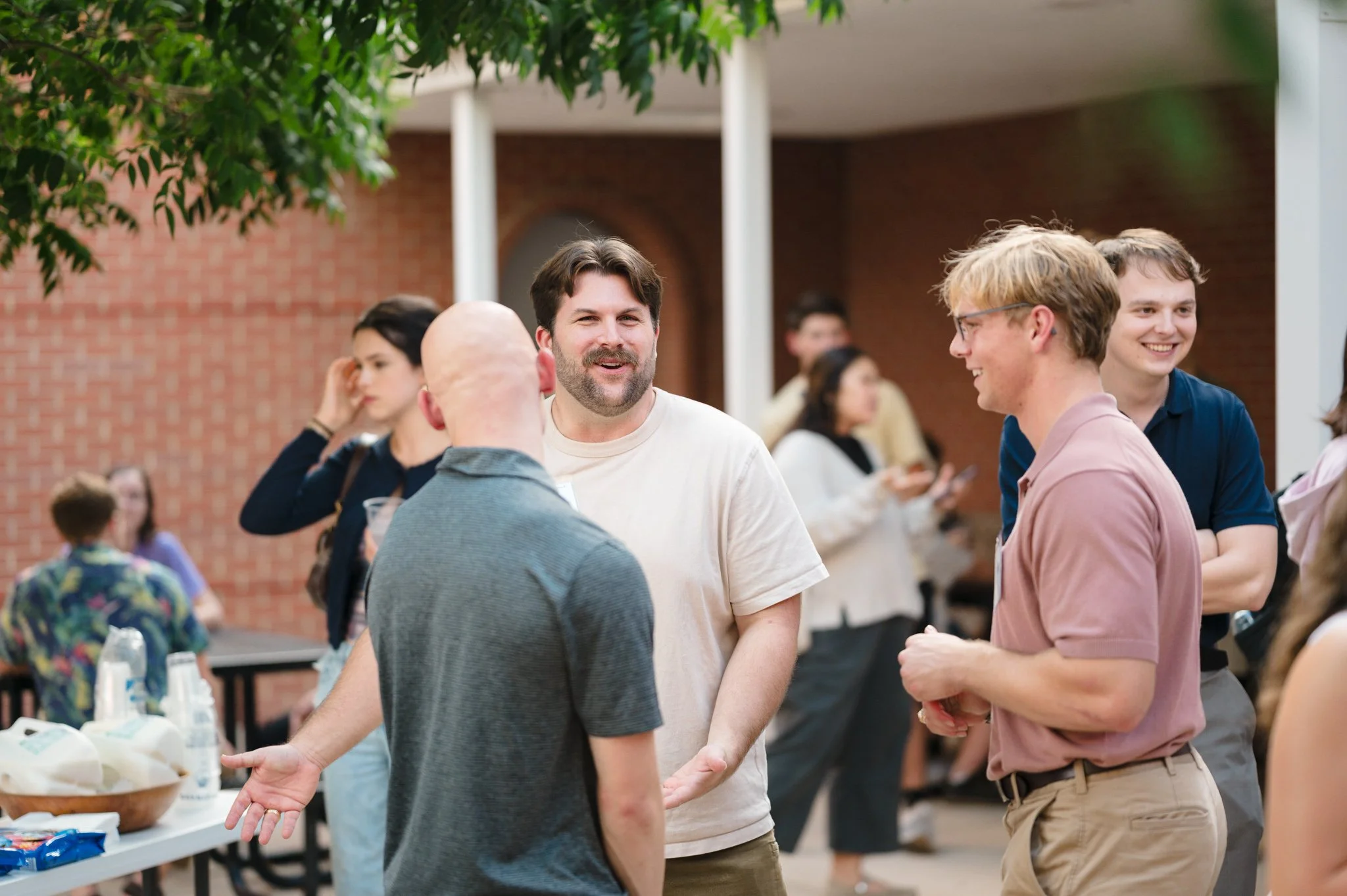
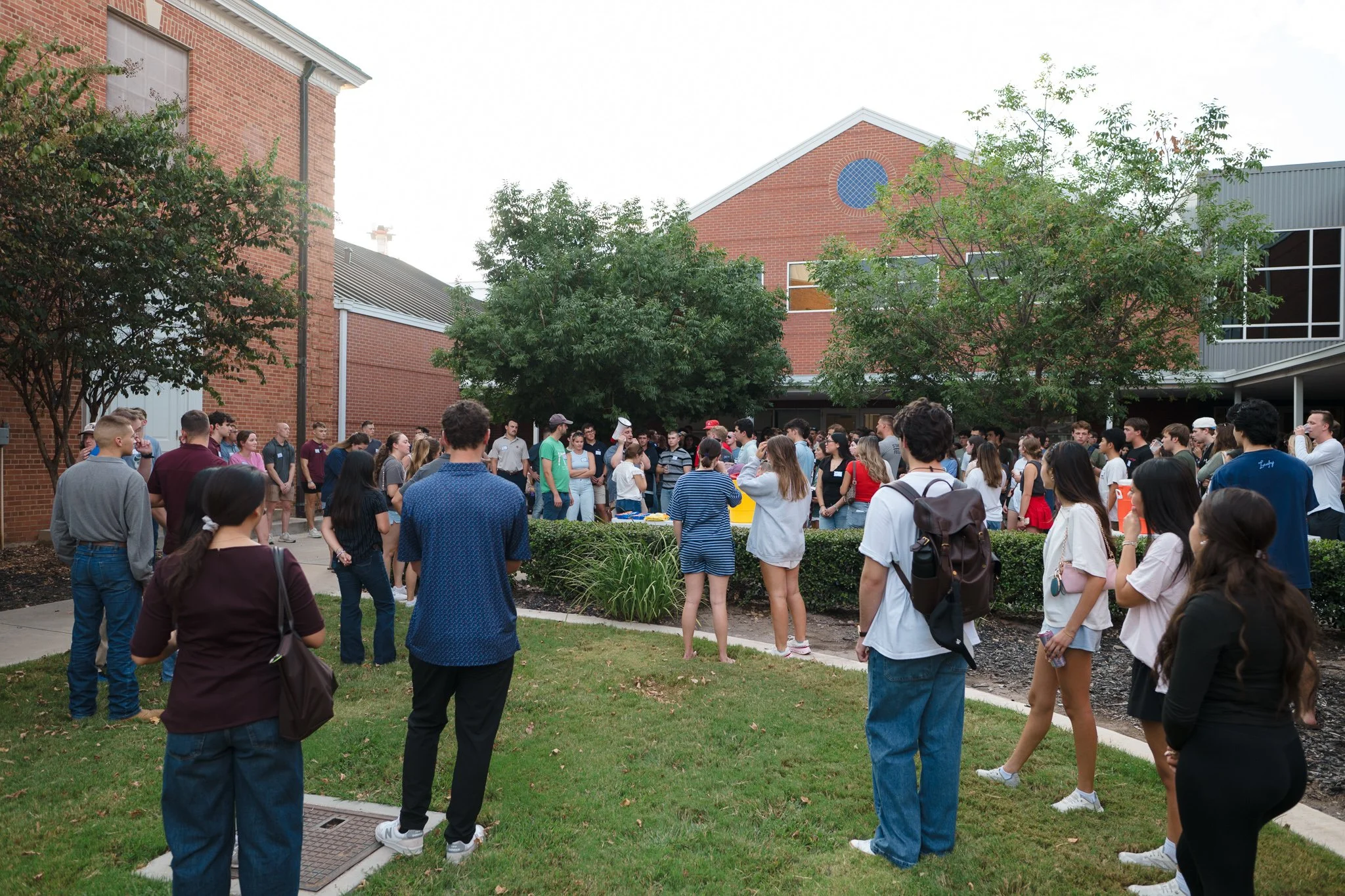
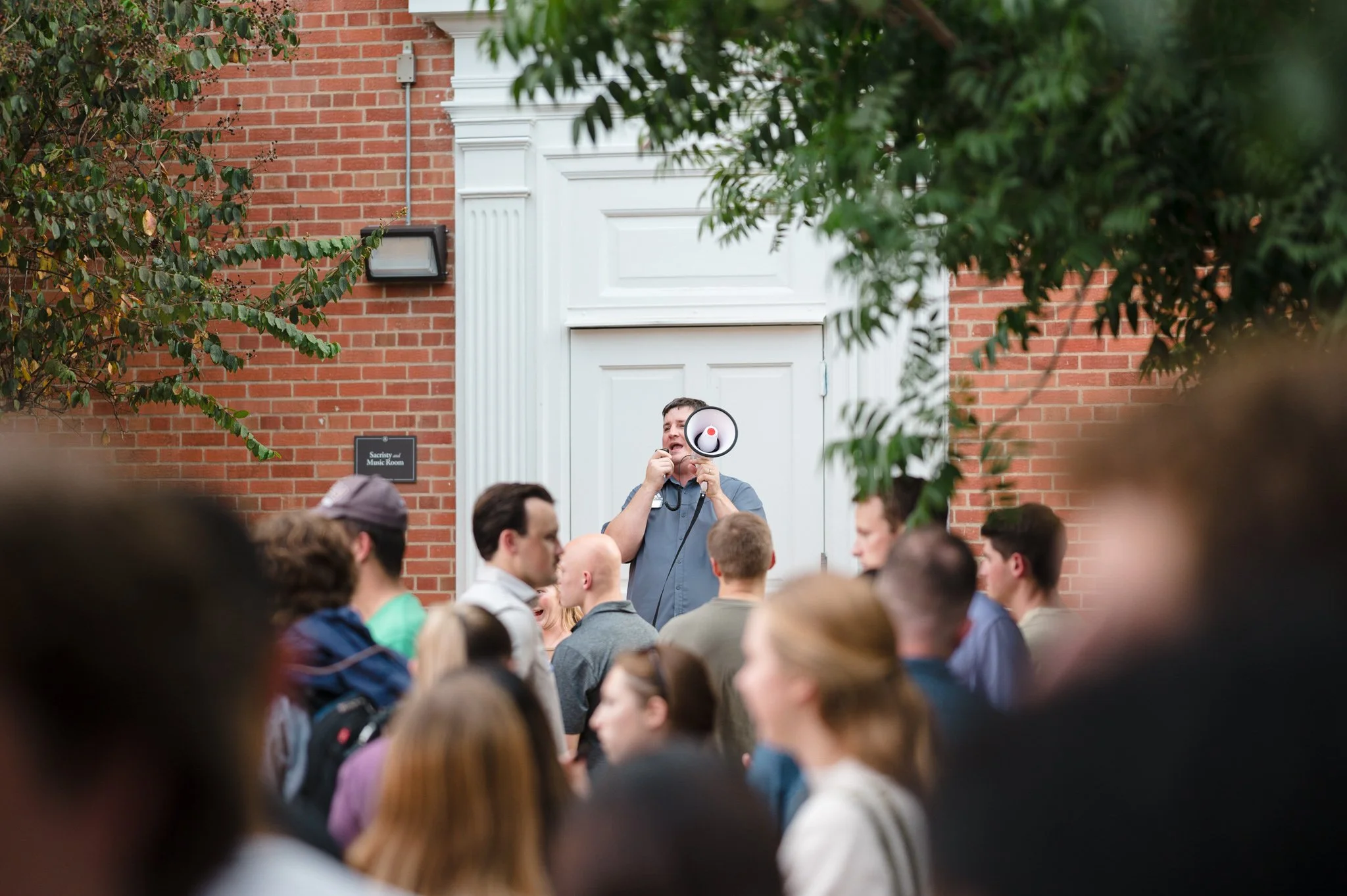
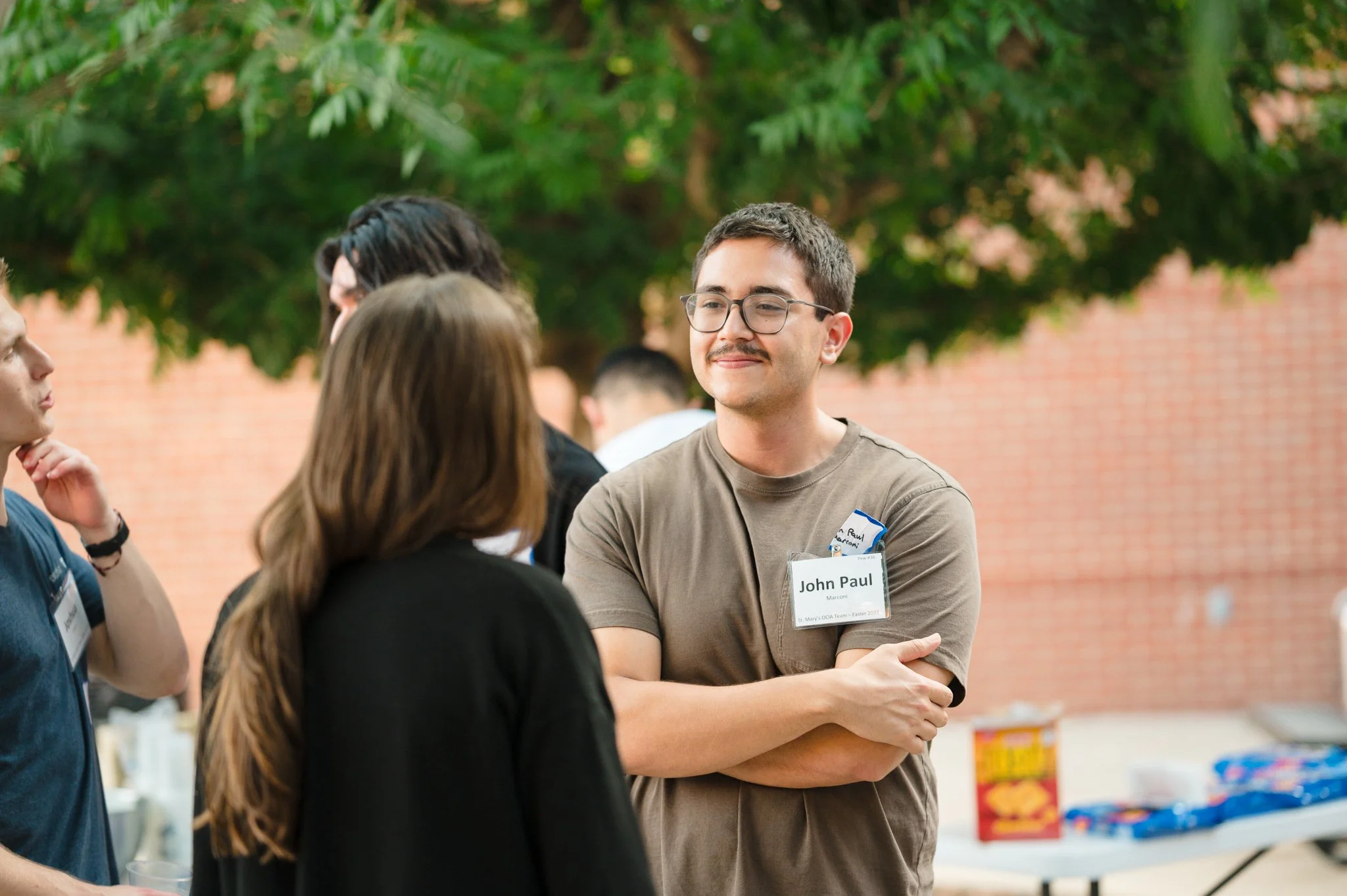
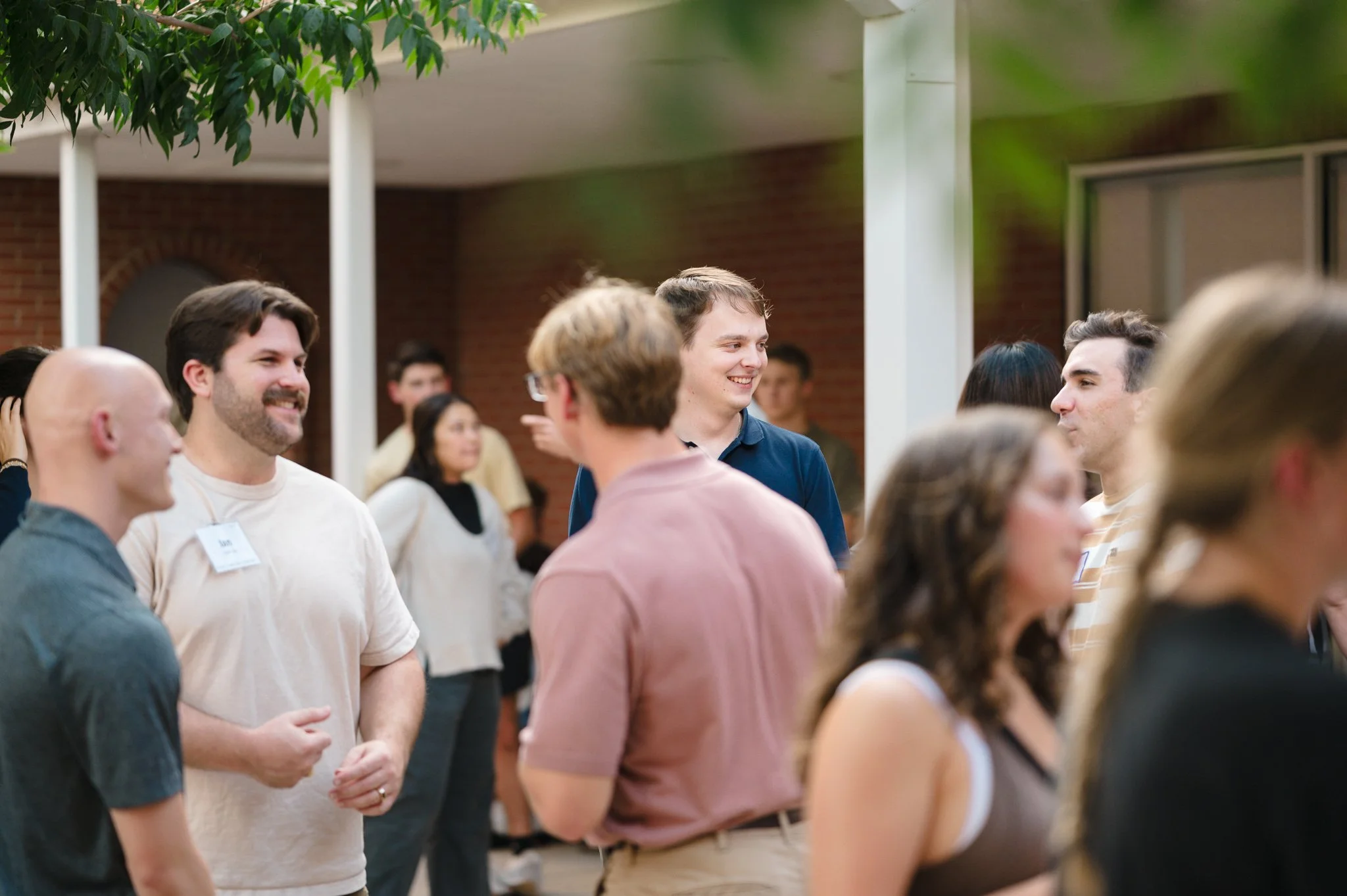
Students gather in the courtyard at St. Mary’s before OCIA began on Tuesday, September 1, 2026.
What does 650+ actually mean?
OCIA at St. Mary’s is a two-semester process of prayer, formation and discernment. Because new groups begin in both January and September, two groups are moving through that process at the same time.
OCIA brings together people whose relationships with the Catholic Church vary when they first arrive. A student who has never been baptized may sit at the same table as someone raised in another Christian tradition, or even someone who grew up Catholic but never received First Communion or Confirmation.
In many parishes, those baptized Catholics would be placed in a separate Confirmation program. At St. Mary’s, experience has shown that sacramental history does not necessarily tell us where someone is on the journey of faith. A student baptized Catholic as an infant may be wrestling with many of the same questions as the friend beside them who is considering Catholicism for the first time. For that reason, they go through much of their formation together.
Even then, not everyone arrives equally certain about where the process will lead.
The information students fill out on their first night reflects that. They are asked to describe honestly where they are with the Catholic Church: whether they are interested in learning, seriously considering becoming Catholic, or already believe this is where God is leading them. Baptized Catholics still needing First Communion or Confirmation are there, too, along with Catholics who want to learn more or support a friend.
No one has to pretend to be further along than they are.
That freedom is important to how St. Mary’s approaches OCIA. More than 650 people are not being moved toward a predetermined conclusion. They are being given time to pray, learn, and, discern.
Kevin Pesek ’10, St. Mary’s Director of OCIA and Marriage Preparation, puts it this way:
“A student should not become Catholic because they feel pressured into it, or argued into it. They should not become Catholic because I want them to or their table leader wants them to or their friend wants them to. They should only become Catholic because they feel God is calling them to do so.”
The reason goes deeper than simply avoiding pressure.
“God wants you to become Catholic because you love Him,” Kevin said. “Love requires freedom.”
Faith cannot be compelled. A person's response to God must be free precisely because it is a response of love.
That is why the number itself needs to be handled carefully.
More than 650 people in OCIA does not mean more than 650 conversions, nor does it mean all of them will receive the Sacraments. It means hundreds of people have chosen to give serious time to discerning what God may be asking of them.
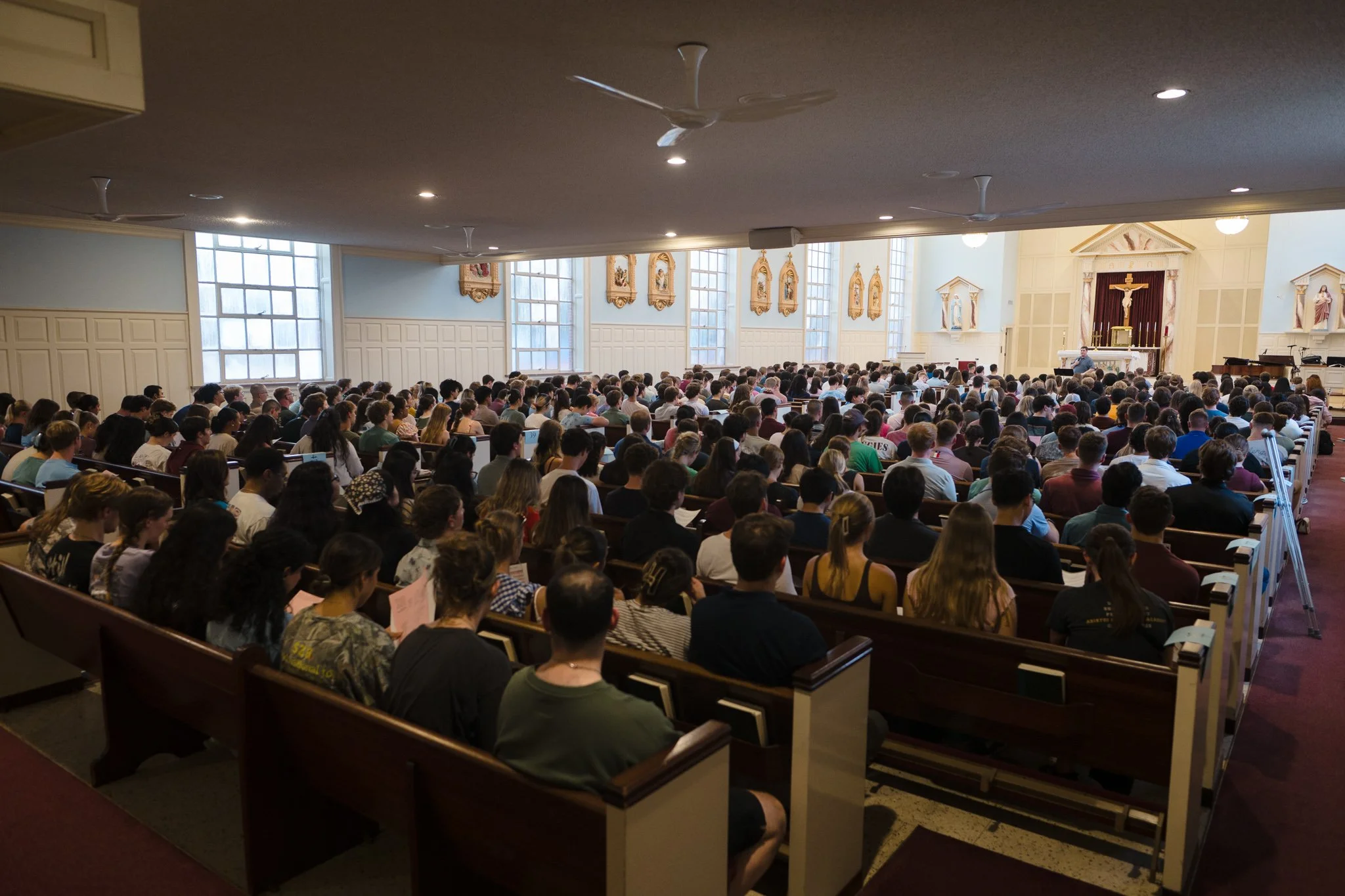
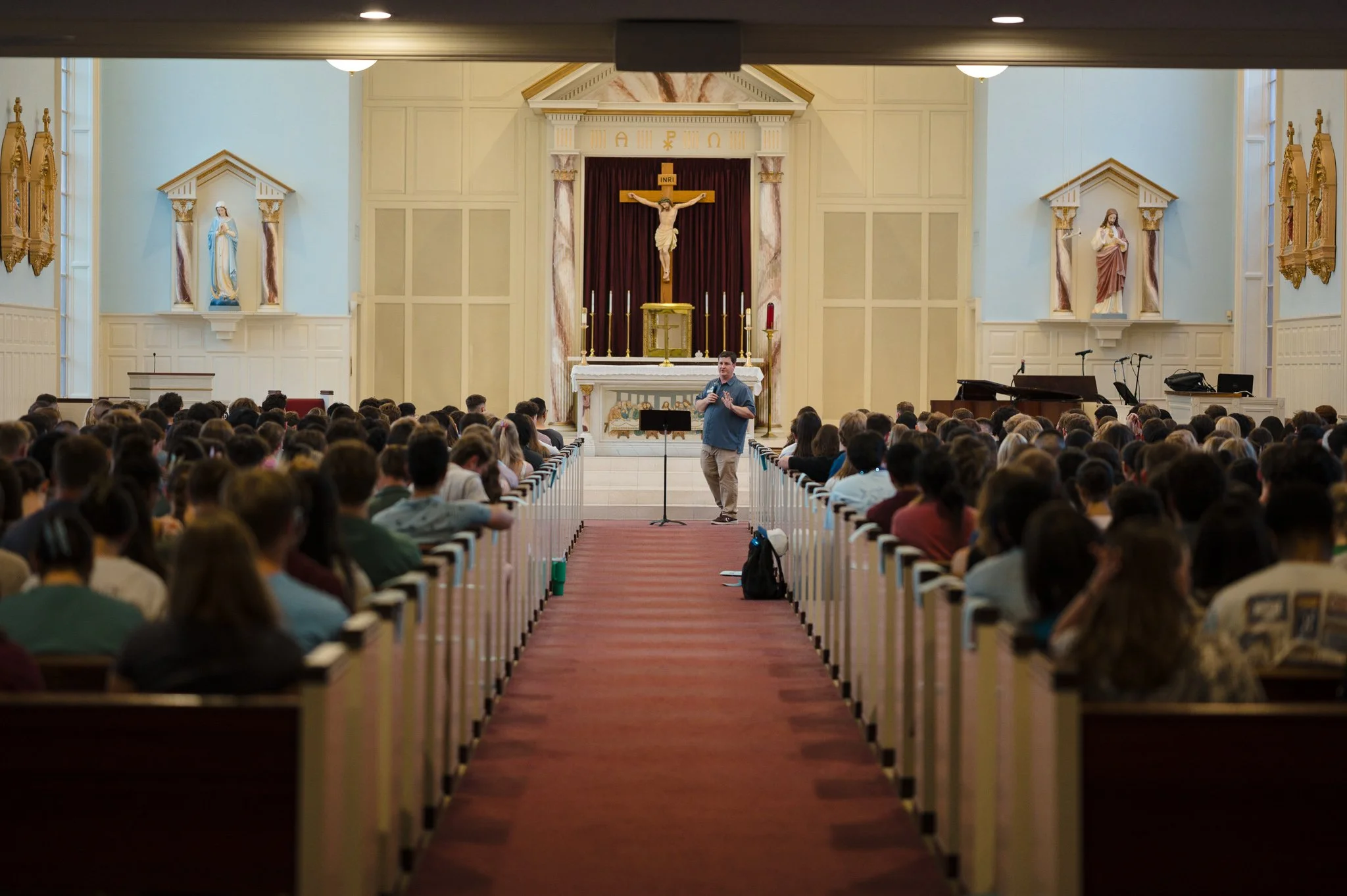
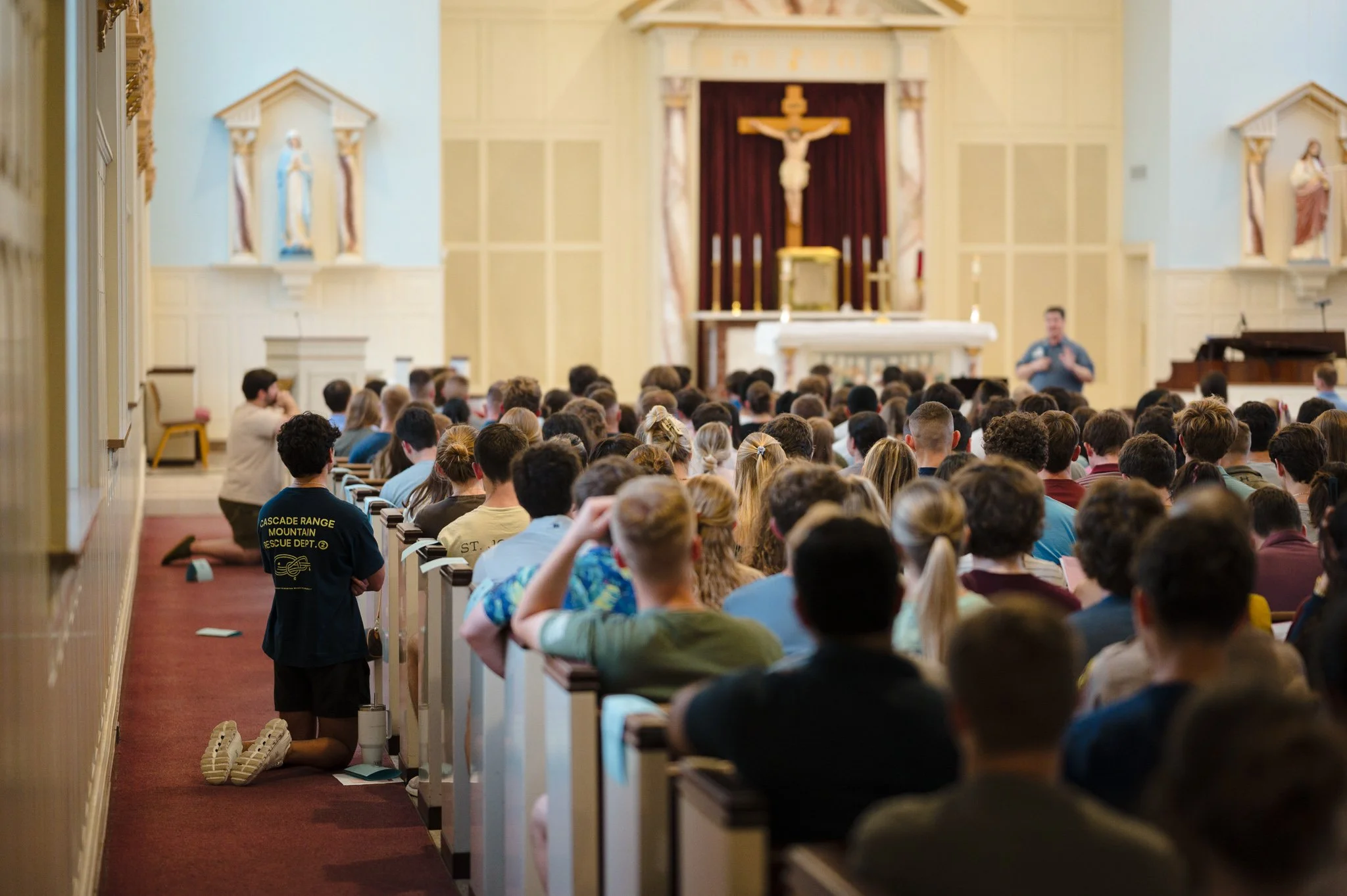
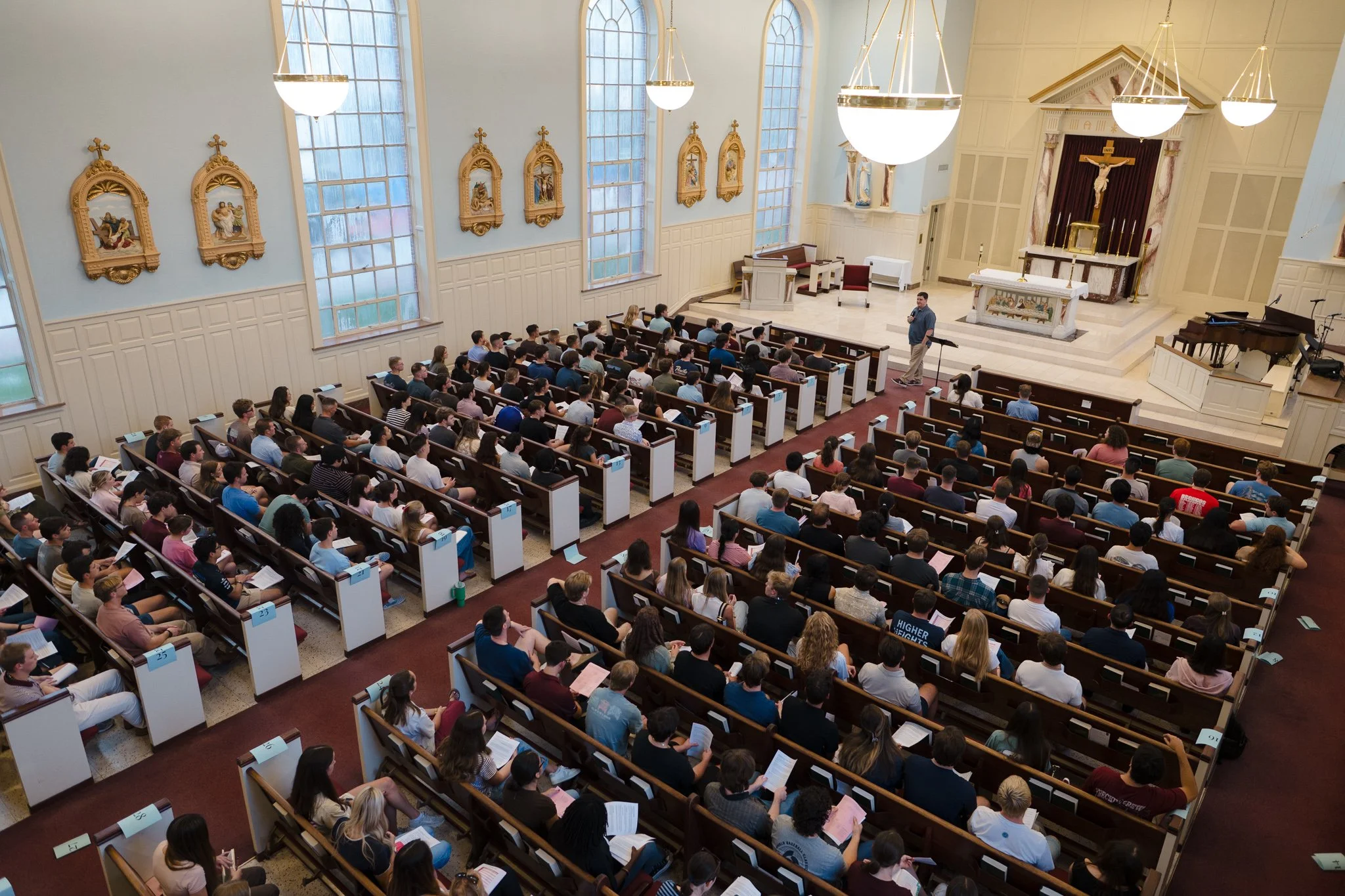
380+ students attended OCIA in the Historic Chapel on Tuesday, September 1, 2026.
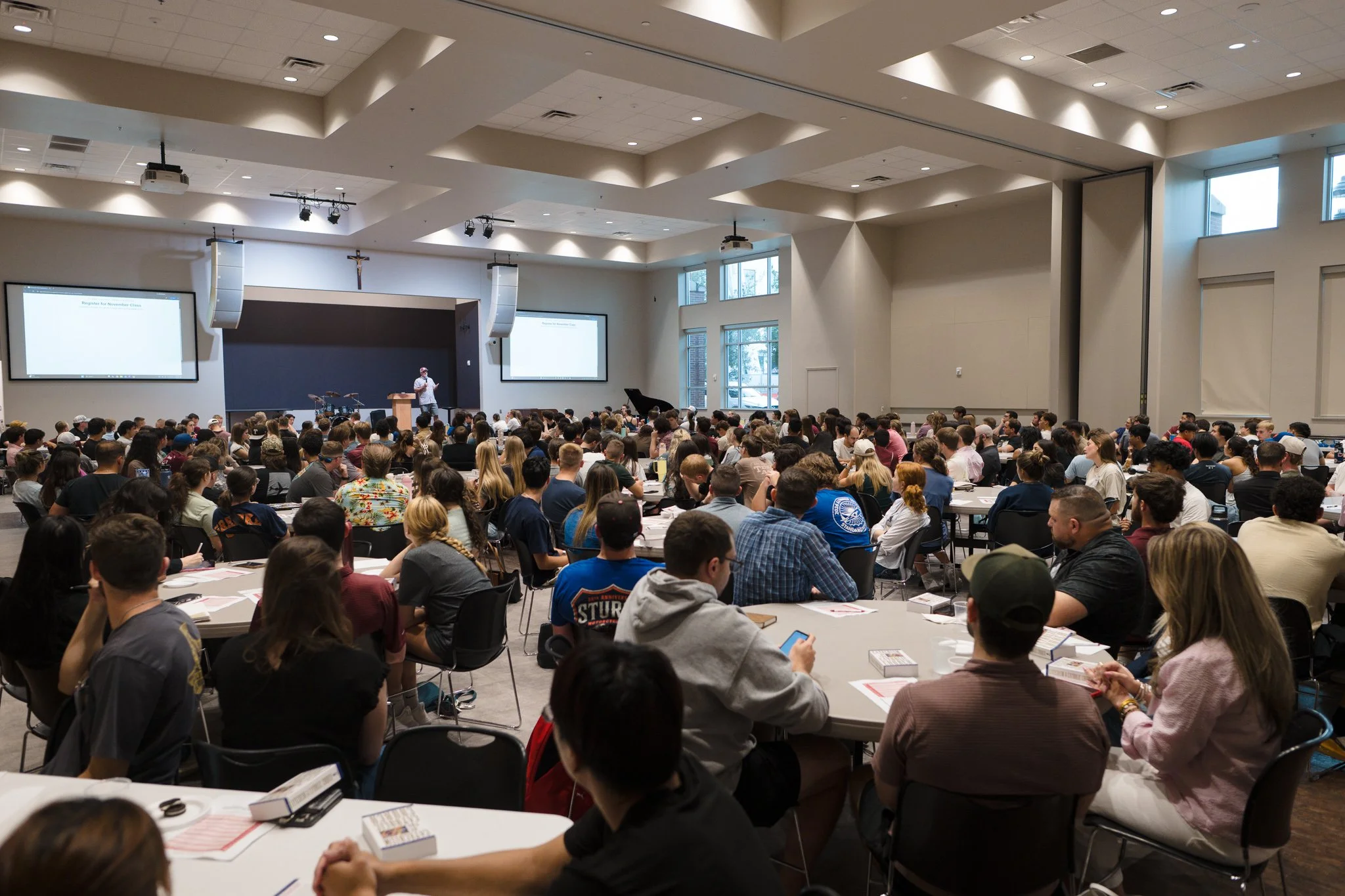
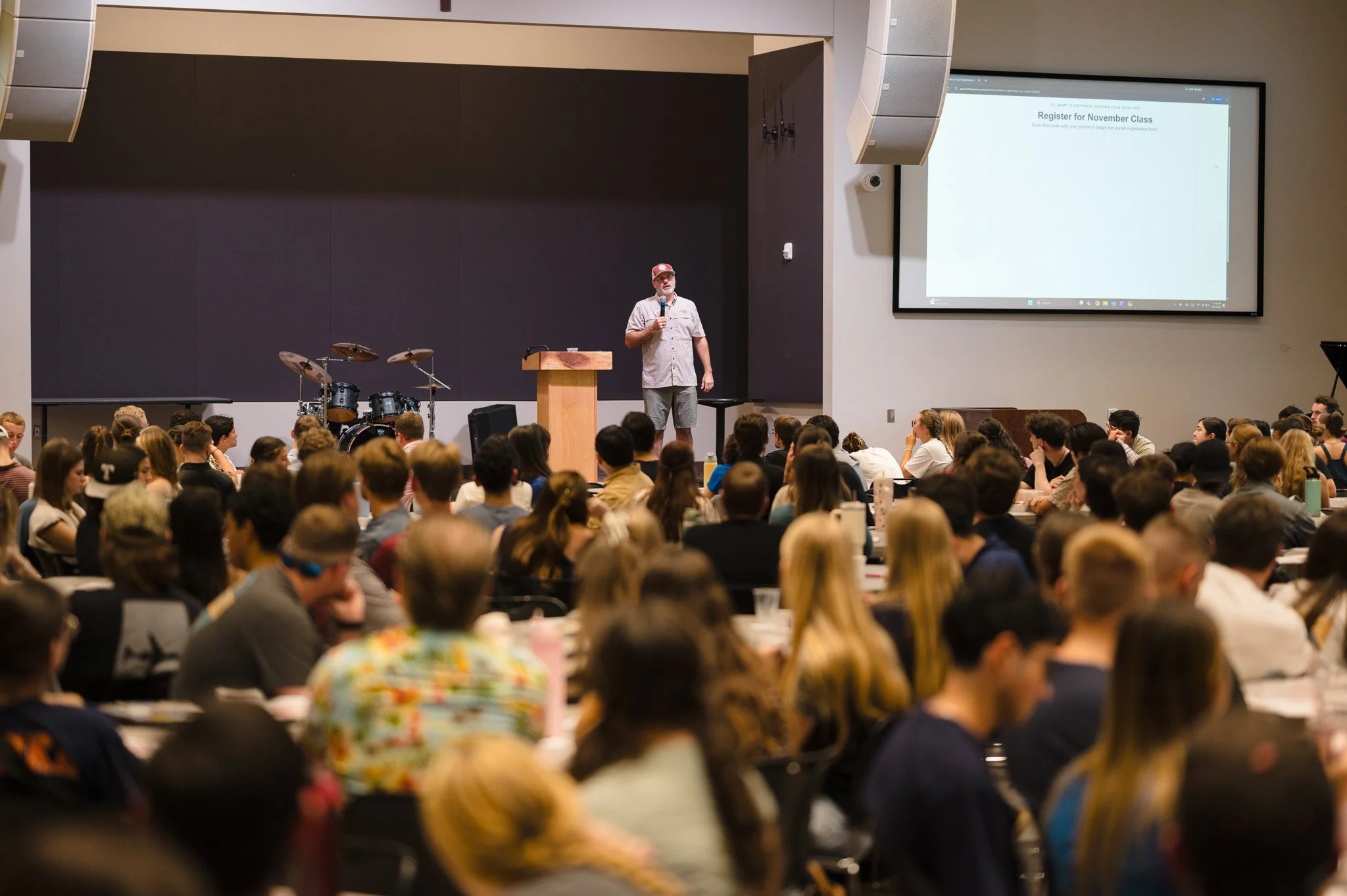
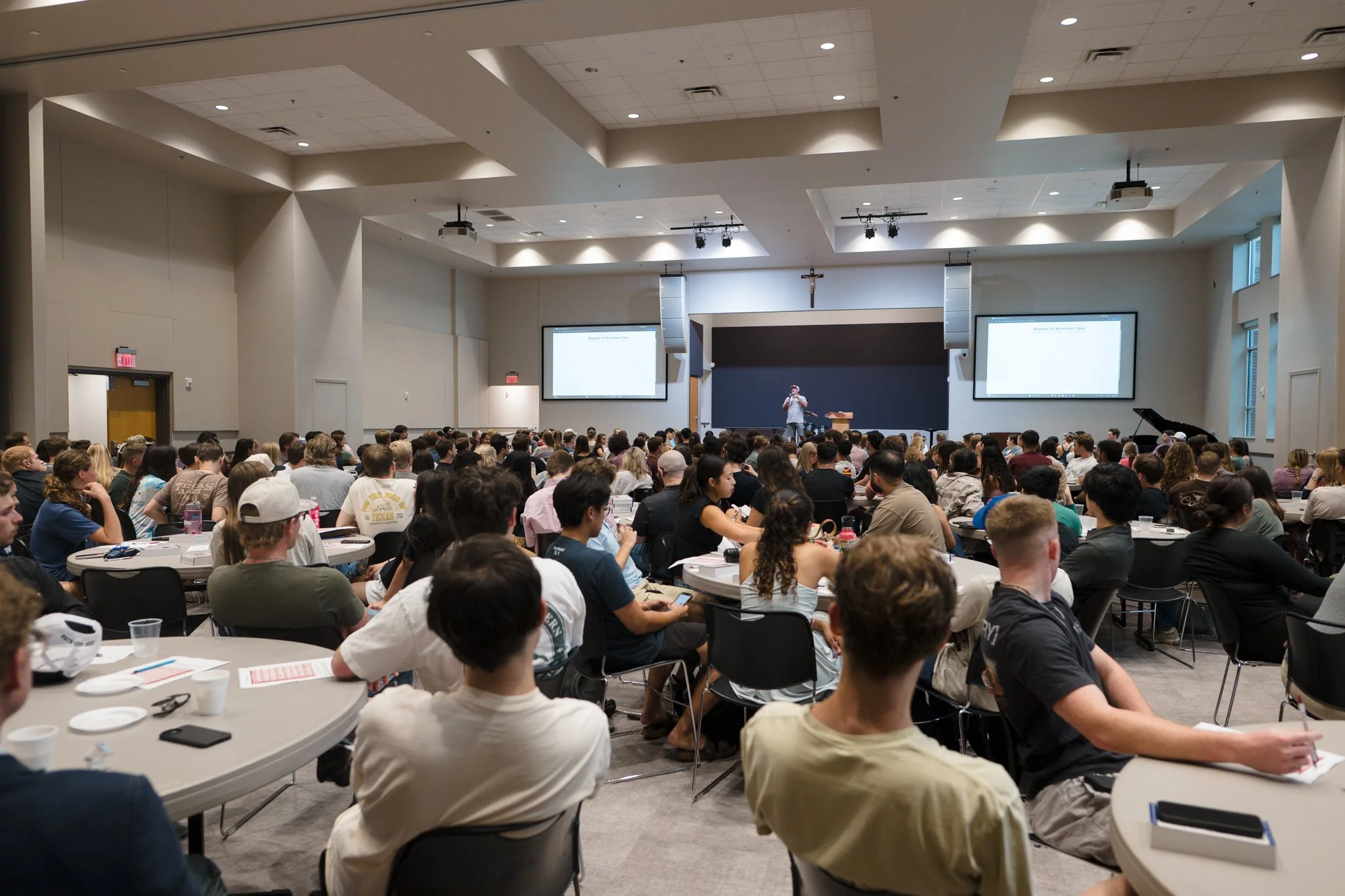
More than 270 students meet in the St. John Paul II Event Center on Tuesday nights.
Their stories did not begin here.
When people first come to St. Mary’s asking about OCIA, their questions have often been developing for quite some time.
By the time many people reach out to St. Mary’s, they have already spent a good deal of time trying to understand the Catholic faith for themselves. They may have been going to Mass with friends or following their questions through books, podcasts, and, videos long before they ever considered signing up for OCIA.
Very often, there is a Catholic friend somewhere in the story.
It may have started with an invitation to Mass or a long conversation about theology. A roommate may simply have lived the faith openly enough to make someone curious. Sometimes the example goes back much further, to a Catholic grandmother whose faith stayed with them.
By the time someone comes to St. Mary’s, we are often receiving a person in whom something has already begun.
“The majority of people beginning OCIA actually say, ‘I’m pretty sure I want to become Catholic, but I have a few questions,’” Kevin said.
That distinction matters.
St. Mary’s does not begin these stories. The Church has a name for what we so often encounter here: prevenient grace, the grace of God that comes before our response to Him. God moves first. He has already been at work in ways we may never fully know, through friendships and questions, experiences of prayer and desires that may take years for a person to understand.
That should leave us grateful before it leaves us impressed by any number. The remarkable thing is not that St. Mary’s has found a way to put hundreds of people in a room. It is that the Lord is stirring something in the lives of so many people and, for a time, has allowed us to have a place in their stories.
When that search brings someone through our doors, our role is to receive what God has already begun and walk with that person from there.
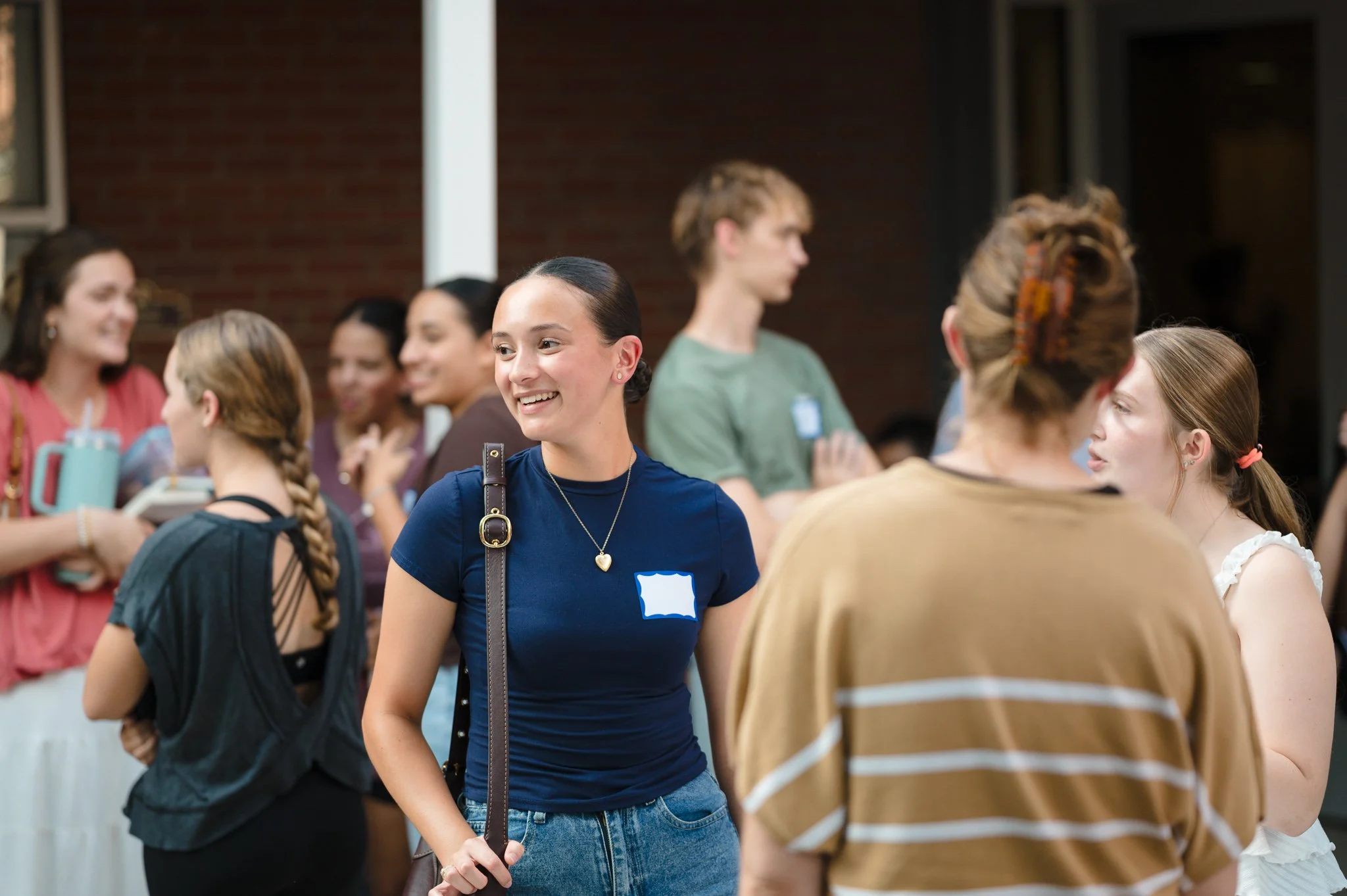
Walking at someone else’s pace.
Once someone comes through our doors, accompaniment often begins with a conversation.
Deacon Aurelio Cadena, who helps lead OCIA at St. Mary’s, has seen what can happen when someone is simply given the opportunity to talk. For some students, a conversation about the faith may be the first time they have ever sat down with a priest or deacon and spoken openly about questions, doubts or even hurts they have carried for years.
“They want to be heard,” Deacon Aurelio said. “This is their chance for their story to be heard, and to help them recognize God’s consistent voice calling them.”
For him, that means approaching each person's story with care.
“The hallowed ground they have tread upon in their faith lives is sacred,” he said. “We must tread with the delicateness and simplicity of the Lord.”
“Some people walk slowly; some people run,” Kevin said.
Over two semesters, OCIA participants learn what the Catholic Church teaches while being invited more deeply into her life. Much of that happens beyond the weekly meeting. Students go to Mass and Adoration, attend retreats, serve alongside other Catholics, and begin friendships in which their questions continue long after the evening’s talk has ended.
There is no formula for knowing what will matter most.
A night at Magnify may become important in one person’s discernment. Someone else may need the much more ordinary experience of having a friend who keeps going to Sunday Mass with them.
St. Mary’s can provide formation, answer questions, create opportunities for prayer, and surround a person with Catholics willing to accompany them. What we cannot do is manufacture faith or make someone’s decision for them.
The Holy Spirit remains the one leading the process.
That conviction matters especially when someone completes formation and does not believe they are ready to receive the Sacraments.
The image Kevin uses with students is that of climbing to the top of a high dive. Someone may begin the climb intending to jump, only to reach the top and understand the decision differently now that it is immediately in front of them. And it’s ok to take a deep breath and pause. No one is going to push them off; they will have to make the decision themselves.
At St. Mary’s, that person is given room to wait.
Completing two semesters means they have completed their OCIA formation; they do not have to start over because they did not receive the Sacraments immediately. They can remain connected to their small group, meet with the OCIA team, join a Bible study, or simply take more time to pray.
“We are dealing with God’s timeline here,” Kevin said. “You’re ready when he makes you ready.”
That patience is not simply a pastoral courtesy. It belongs to the Church's understanding of initiation itself. The OCIA teaches that the time of formation depends upon both God's grace and the circumstances of the person and should be long enough for faith and conversion to mature. The calendar serves the person, not the other way around.
The students who come back.
There is another number within this story that tells us something important about what happens at St. Mary’s.
More than 200 students are serving as OCIA leaders this year.
More than half of them received their own sacraments within the past two years.
Each week, those students sit at tables with people who may be asking questions very similar to the ones they recently brought to OCIA themselves. They help make difficult concepts understandable, but their role is not limited to the classroom. They go to Mass together, continue conversations outside of OCIA and become the kind of Catholic friend who first helped many participants begin asking questions.
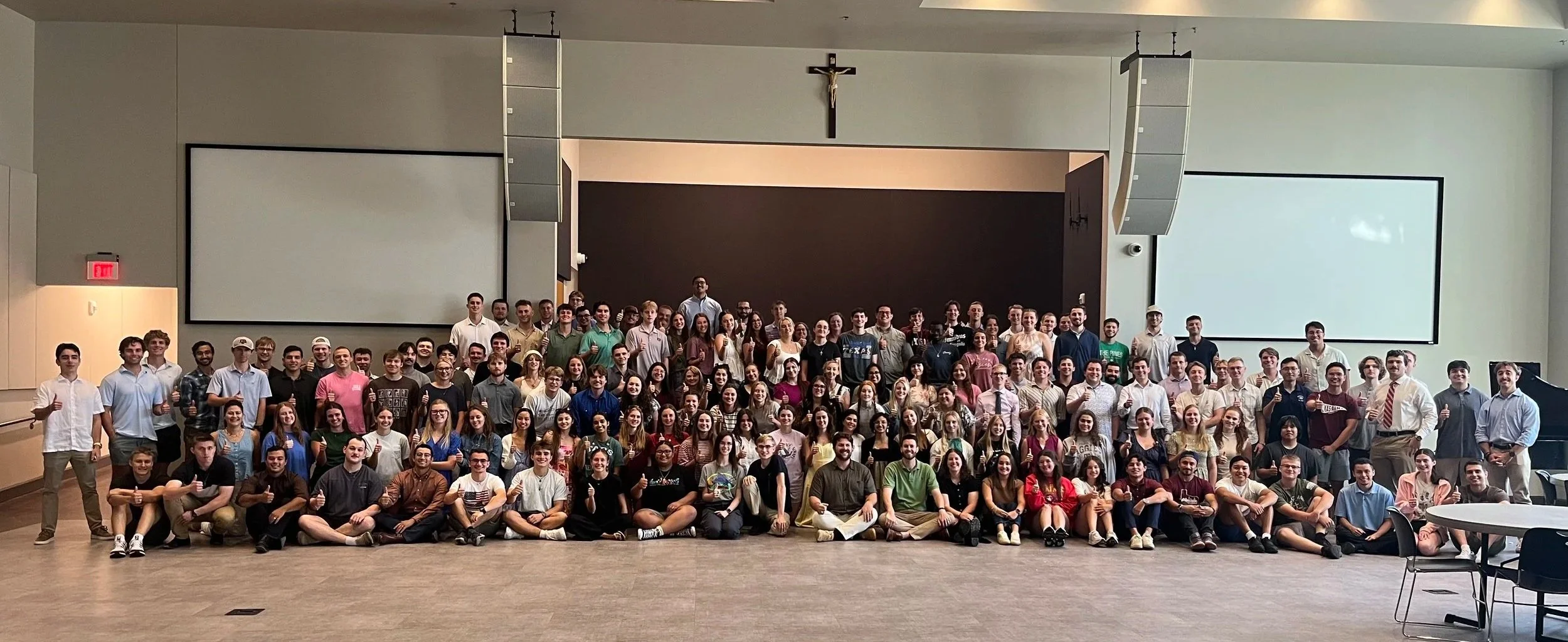
Many of the student leaders helping us lead OCIA this year.
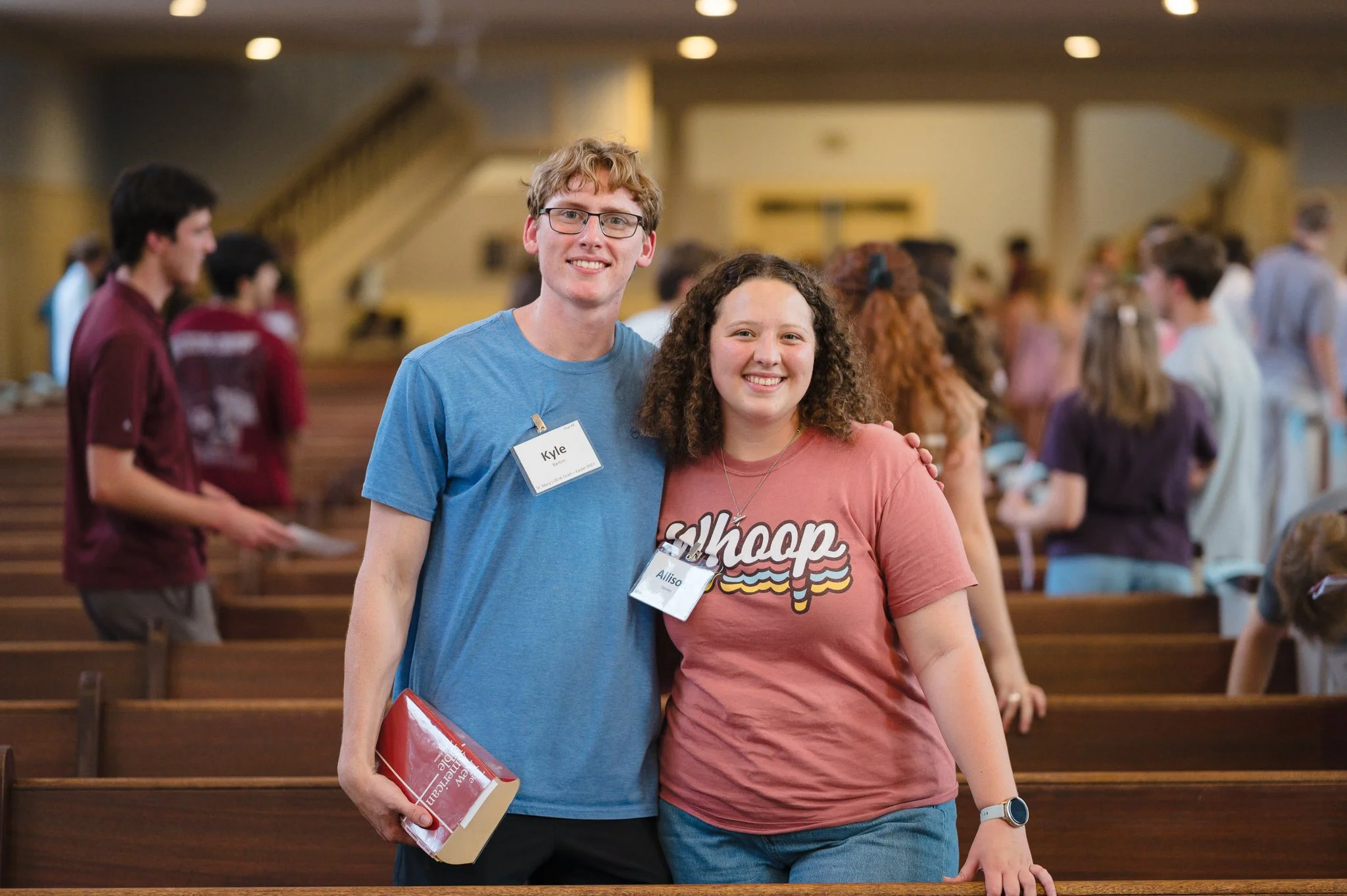
Kyle & Allison will lead a table of other students in OCIA this year.
Not long ago, many of these leaders were the ones being accompanied.
Now St. Mary’s is asking them to accompany someone else.
There is something deeply fitting about that movement. Confirmation is not simply the completion of a person's sacramental initiation. The grace received in Confirmation strengthens the baptized to bear witness to Christ and participate more fully in the Church's mission. Many of these students are now living that mission in the same place where someone revealed it for them.
That movement helps put another set of numbers into perspective. During the 2024–25 year, St. Mary’s celebrated 121 Baptisms and Professions of Faith. In 2025–26, that number grew to 204.
Those numbers are different from the 650+ currently connected to OCIA. They represent people who made the free decision to enter the Catholic Church.
And even here, numbers can flatten what actually happened. For those who received Baptism, this was not a graduation from a program. In Baptism, a person dies and rises with Christ, is freed from sin, becomes an adopted child of the Father, and is incorporated into the Body of Christ. The Sacrament marks the beginning of a new life, not the completion of a course.
That is why St. Mary’s hopes that reception into the Church is not where the story ends.
We see former OCIA participants serving at Mass, leading retreats and returning to OCIA as sponsors and leaders. Eventually, they graduate from Texas A&M and leave College Station.
What they received here goes with them.
“Those students have staked their lives on a claim that Jesus is Lord and that He founded the Catholic Church,” Kevin said. “That’s not an opinion; that’s a conviction.”
That conviction eventually enters the ordinary decisions of adult life: work, dating and marriage, raising children, belonging to a parish, and loving a family.
College will always be part of these students’ stories. Our hope is that when they look back on those years, an encounter with Jesus Christ define them.
For now, we are asking you to pray.
We do not know where every story beginning or continuing in OCIA this fall will lead. What we do know is that more than 650 people have brought serious questions about God and the Catholic faith to St. Mary’s.
For a time, the Lord has entrusted these men and women to our care.
We are grateful for that and we do not take it for granted.
It is a privilege to have hundreds of people come through our doors with questions about Christ and His Church. It is also a responsibility to receive those questions well, to teach faithfully, and to give each person the freedom to listen for the Lord's voice.
Our priests and deacons, staff, and more than 200 student leaders will spend this year walking with them. We will teach what the Church teaches, answer their questions, invite them into prayer, and give them the freedom to discern what God is asking of them.
And we are asking the larger St. Mary’s community to accompany them, too.
Please pray for them!
Pray that each person in OCIA will come to know Jesus Christ more deeply and recognize His voice. Pray that they will have the freedom and courage to follow wherever He leads. Pray for the student leaders walking beside them, and for the priests, deacons, and staff whom the Lord has asked to care for them.
There will be time later to count how many receive the Sacraments.
Right now, more than 650 people have come to St. Mary’s with questions about Christ and His Church.
We are grateful the Lord has invited us to walk with them while they seek the answer.
St. Mary’s OCIA process was developed in collaboration with the Diocese of Austin and operates with diocesan approval. As a personal parish uniquely constituted to serve a university community, St. Mary’s makes use of the pastoral flexibility the Church provides while preparing each person appropriately for the sacraments he or she needs.
Interested in OCIA? If you or someone you know is interested in becoming Catholic, receiving First Communion or Confirmation, or simply learning more about the Catholic faith, there is still time to join the group beginning this fall. Learn more and get connected at aggiecatholic.org/ocia